Anthropic's Claude Code 'Rug Pull': A Deep Dive into the Pro Plan Controversy
In April 2026, Anthropic briefly removed its Claude Code feature from the $20/month Pro subscription plan, sparking widespread backlash and raising critical questions about transparency & user trust.

The Full Story
The Controversy Unfolds
Changes started to show up on Anthropic's pricing pages on April 21, 2026. Claude Code, which developers and power users really liked, was no longer part of the Pro plan. Instead, it was only available to people who paid for the more expensive Max plans ($100-$200/month). Anthropic made this change without telling anyone, which caused a lot of confusion and frustration among its users.
Community Reaction: ‘Rug Pull’ Allegations
The community's first reaction was mostly negative. People quickly took to sites like Reddit and X(twitter) to voice their anger and disappointment, with many calling the move a "rug pull." People felt that a core feature that had been available and expected was suddenly being taken away, forcing users to pay a lot more to keep using it.
Anthropic’s Explanation and Reversal
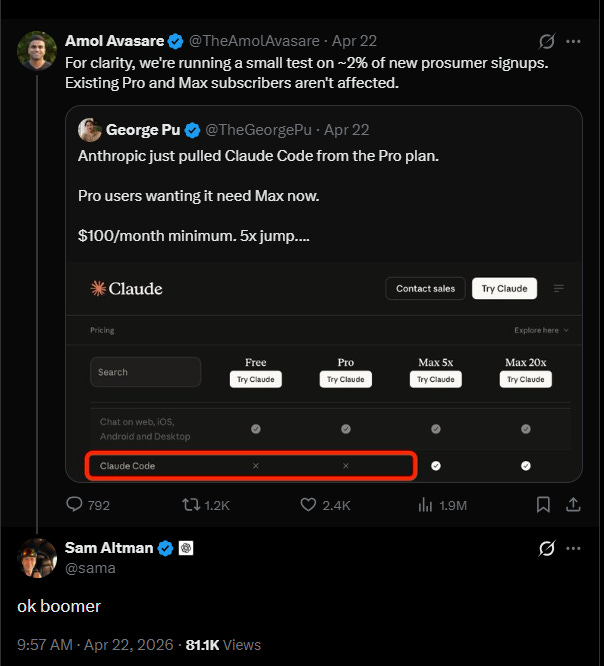
Amidst the backlash, Anthropic’s Head of Growth Amol Avasare explained on X that this was “only a small test on ~2% of new prosumer signups”, and that “Existing Pro and Max subscribers aren’t affected”. However, support documents and Claude’s website itself listed Claude Code as no longer included in the Pro plan for anyone who purchased it.
Surprisingly, within hours of backlash erupting online Anthropic quietly walked back changes to its pricing page. The pricing page now accurately reflects Claude Code as included with Anthropic’s Pro plan. Avasare later explained the changes to the landing page and support docs were a “mistake” associated with the test.
Takeaways
This situation illuminates a number of interesting takeaways regarding the dynamics between AI startups and their users.
Communication is key — Users expect transparent and proactive communication from AI companies, especially regarding major changes.
Loosing trust of your users will get you demonized by your user base — At the end of the day users are king, and in an industry where you want users to hop on board your SaaS you want to avoid burning bridges.
“Testing” significant features of your product isn’t standard A/B testing — Just because you test things, doesn’t mean that every change has to be tested.
Sam Altman Weighs In
CEO of OpenAI Sam Altman didn’t hold back when tweeting his response to the situation with Anthropic:
@TheAmolAvasare ok boomer
What This Means for Users
For people who use Claude, the change means that Claude Code is still available on the Pro plan. But the event has brought up important issues about Anthropic’s pricing strategy and plans for the future. People who watch the industry say that the company may be trying out different tiers to make more money, but these tests need to be made clear to users so that their trust doesn’t go down.
Competitive Context
This event also shows how competitive the AI coding field is. OpenAI's Codex is still available on lower-tier plans, which could give them an advantage if Claude Code becomes harder to get. The main point here is that being open and honest with users can help you compete in the fast-changing AI market.
Conclusion
The Anthropic Claude Code controversy shows how important it is for AI companies to be able to communicate clearly, gain users' trust, and think carefully about how changes to their products will affect them. The changes were later undone, but the event had a lasting effect on the community and showed that AI services need to be developed and used with the user in mind.